




Description
🧬BPC 157 and TB 500 Peptide Blend – 10mg and 20mg for Lab Research
BPC-157 and TB-500 are among the most discussed research peptides in modern laboratory studies. Researchers frequently study these peptides together because they are often included in tissue-repair, recovery, and peptide research projects. As a result, searches for BPC-157 and TB-500 continue to grow among laboratories looking for reliable and transparent peptide suppliers.
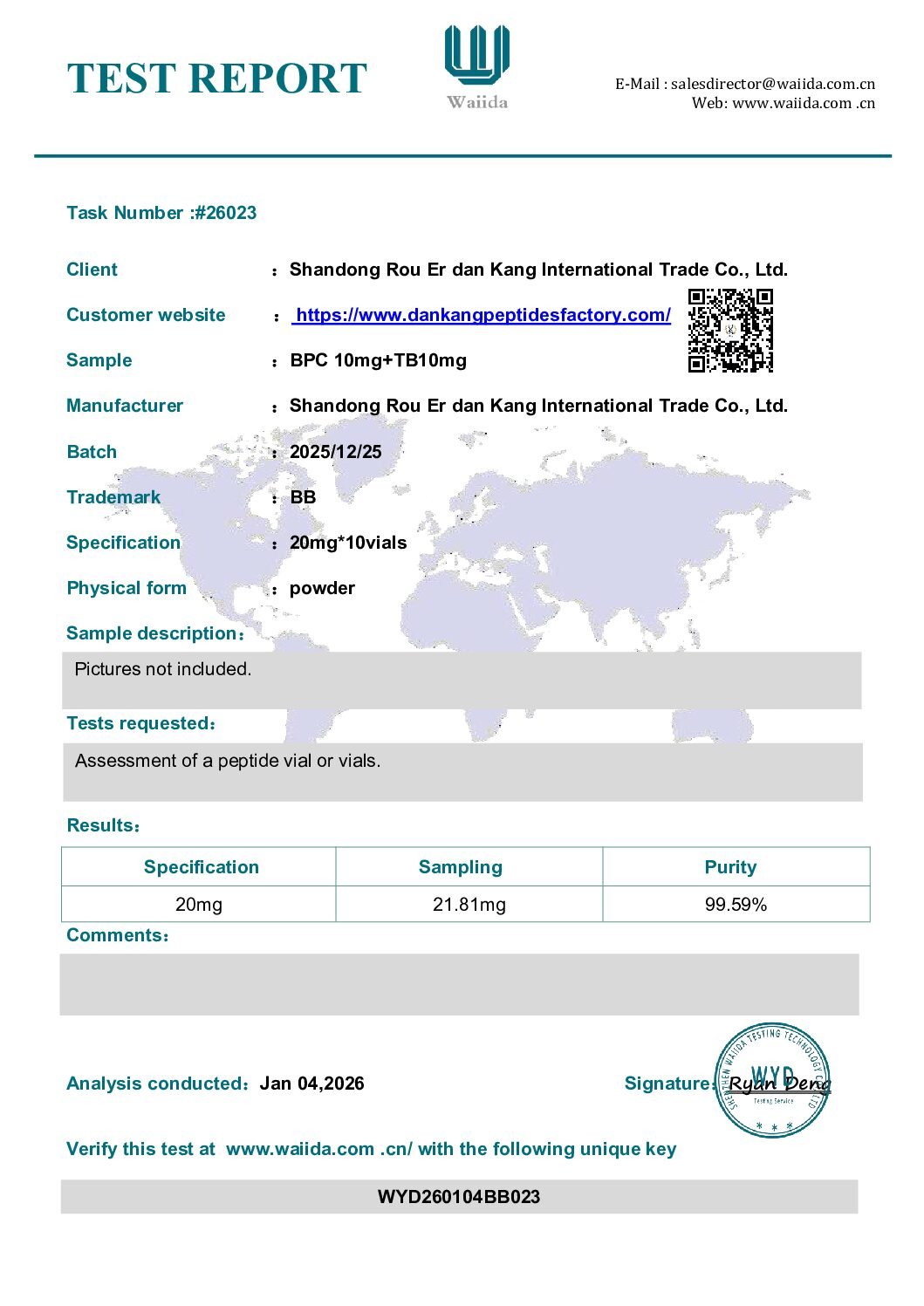
At Johnson Peptides, quality remains our highest priority. Every peptide product undergoes strict quality control procedures before becoming available for research use. In addition, each batch receives laboratory verification to confirm identity, purity, and consistency. Researchers can review our Certificate of Analysis documentation through our Lab Testing and COA page to better understand our quality standards.
Many researchers searching for BPC 157 and TB 500 focus on supplier transparency before making a purchase decision. Therefore, Johnson Peptides provides detailed product information, clear storage guidance, batch tracking, and third-party testing verification whenever available. This approach helps researchers source products with greater confidence and consistency.
The combination of BPC-157 with TB500 continues to attract attention within research environments. However, quality standards remain more important than marketing claims. For that reason, our focus stays on purity testing, reliable manufacturing processes, and transparent documentation rather than unsupported claims.
Researchers often compare individual peptide products before selecting a peptide blend. Those interested in learning more about individual compounds may also review our BPC-157 research peptide product page for additional information. Furthermore, researchers exploring related categories can browse our Inflammation Reducer collection to discover other research-grade peptide products.

What Is BPC 157 and TB 500 Blend? A Simple Research Overview
This blend puts two powerful research peptides into one vial. First, BPC-157 comes from a protein found in stomach juice. Second, TB-500 helps cells move and grow. Third, when you mix them, scientists can study how they work together.
As a result, researchers use this blend to study:
-
How tissue repairs after harm
-
How new blood vessels form
-
How cells move to where they are needed
-
How inflammation changes in lab models
For these reasons, when you buy bpc 157 and tb 500 blend for your lab, you pick a compound with many uses

Main Lab Uses for BPC 157 and TB 500 Blend
Researchers who use peptides bpc 157 tb500 study them in several lab settings:
Tissue Repair Studies
First of all, scientists study this blend for tendon, muscle, and ligament repair. For example, lab work shows both peptides help fibroblasts move and grow in controlled tests.
Blood Vessel Growth
Next, researchers use this blend to study new blood vessel formation. Specifically, BPC-157 helps with vessel growth signals while TB-500 helps cell movement.
Cell Recovery Paths
Moreover, this blend helps study how cells recover after stress. For instance, lab models have tested its effects on cell survival and repair.
Inflammation Research
Finally, scientists study how these peptides work in inflammation models. Consequently, labs use this blend often for repair biology.
To see similar products, visit our Inflammation Reducer category →

Product Details
| Detail | Information |
|---|---|
| Peptide Type | Synthetic Research Peptide Blend |
| Blend Content | BPC-157 + TB-500 in one vial |
| Total Strength | 10mg or 20mg |
| Purity | ≥99% (HPLC checked by outside labs) |
| Form | Freeze-dried powder |
| Storage | Keep at -20°C. Shield from light and wetness. |
View Certificate of Analysis (COA) → BPC 157 and TB 500
How to Store, Mix, and Handle bpc 157 with tb500 (For Lab Use)
Storage conditions play an important role in peptide stability. Researchers should store peptide products in a cool, dry environment away from direct sunlight and excessive heat. Proper storage helps maintain product quality and protects batch consistency throughout the research period. Good handling keeps your peptide stable for your tests:
Storage (Before Mixing)
-
Keep at -20°C (freezer)
-
Shield from light (use dark vials or foil)
-
Shield from wetness (keep drying packs nearby)
How to Mix
-
Use clean sterile water or saline
-
Swirl gently—do not shake hard
-
Measure based on your test needs
Storage (After Mixing)
-
Keep cold at 2-8°C
-
Use within 14 to 30 days based on your plan
-
Do not freeze and thaw more than once (split into small doses first)
Other Research Products You May Like
Check out these related products:
-
Single BPC-157 Peptide → – For studies focused only on BPC-157
-
Inflammation Reducer Category → – See other lab compounds for inflammation research
-
Full Shop → – Browse all our research peptides
Johnson Peptides continues to invest in transparency because researchers deserve clear information about the products they purchase. Therefore, every batch receives careful review before release. Researchers can also explore our complete peptide catalog through the Shop page to compare available products and research options.
Why Researchers Choose Johnson Peptides
- Research-grade peptide products
- Third-party laboratory testing
- Batch-specific quality verification
- Certificate of Analysis availability
- Secure online ordering
- Fast USA shipping
- Transparent product information
- Professional customer support
- Consistent quality standards


